Ever been told you’re “just average” and it stung a little? 😬 That emotional reaction often ties directly to understanding mediocrity meaning. In a world obsessed with achievement, productivity, and “being the best,” this word shows up more than you might think in school feedback, workplace reviews, social media debates, and even self-reflection.
Knowing what mediocrity truly means isn’t just about vocabulary. It helps you interpret criticism, express standards, and understand modern conversations around success and personal growth. Whether you’re a student, professional, content creator, or simply a curious learner, this guide breaks everything down in clear, real-life language.
You’ll learn the definition, origin, correct usage, examples in daily conversations, common misunderstandings, and related words. Plus this article is Updated for 2025, so it reflects how the term is used today in both formal and casual communication.
Let’s decode it.
What Does “Mediocrity” Mean?
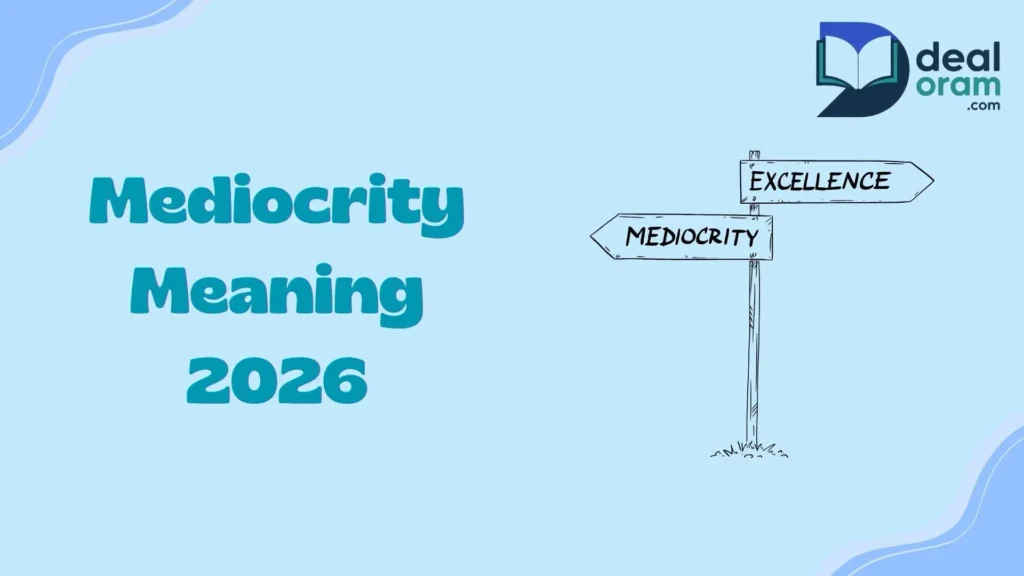
Mediocrity means being average in quality, ability, or performance without excellence or distinction.
⭐ Quick Answer
Mediocrity refers to a state of being ordinary or moderate, often implying lack of effort, ambition, or exceptional talent.
Origin & Etymology
The word comes from the Latin mediocris, meaning “moderate” or “middle height.” Originally, the idea of being “in the middle” wasn’t negative. Over time, especially in competitive societies, the meaning shifted toward underachievement or uninspiring performance.
By the 18th and 19th centuries, English speakers began using mediocrity in literature and criticism to describe unremarkable talent or predictable outcomes.
Pronunciation
mee-dee-OK-ruh-tee
Breaking it into syllables can help: mee / dee / ok / ruh / tee.
How to Use “Mediocrity” Correctly in Texts & Chat
Understanding mediocrity meaning is one thing using it naturally is another. Here’s how modern speakers apply it across communication styles.
Tone & Context
The word usually carries a:
- Critical tone 😐
- Motivational tone 🔥
- Reflective tone 🤔
- Slightly sarcastic tone 😏
Example tones:
- Motivational: “Never settle for mediocrity.”
- Critical: “The project suffered from mediocrity.”
- Reflective: “I fear mediocrity more than failure.”
Platform-Specific Usage
SMS / WhatsApp:
Used in deeper or emotional chats.
Example: “I feel stuck in mediocrity lately.”
Instagram captions:
Common in motivational content.
Example: “Choose growth over mediocrity 💪”
Twitter/X posts:
Used in opinions or hot takes.
Example: “Comfort zones breed mediocrity.”
Discord / Gaming chats:
Often playful criticism.
Example: “That gameplay was pure mediocrity 😂”
Reddit discussions:
Seen in debates about careers, education, or creativity.
When NOT to Use It
Avoid using mediocrity:
- In formal praise situations
- During sensitive feedback without explanation
- In professional emails unless carefully framed
Formatting Tips
- Usually lowercase unless starting a sentence
- Rarely abbreviated
- Often paired with emojis like 😐🔥📉
- Can be emphasized with italics or quotes
Real Conversation Examples Using “Mediocrity”
1️⃣ Between Friends
Ali: “Why didn’t you apply for the scholarship?”
Hamza: “I was afraid of failing.”
Ali: “Staying in mediocrity is worse than failing.”
👉 Emotional meaning: Encouragement to aim higher.
2️⃣ Dating Scenario
Sara: “What attracts you most in a partner?”
Usman: “Ambition. I can’t stand mediocrity.”
👉 Emotional meaning: Preference for growth mindset.
3️⃣ Family Conversation
Mom: “Why are your grades slipping?”
Son: “I guess I stopped trying.”
Mom: “Don’t accept mediocrity in your future.”
👉 Emotional meaning: Concern mixed with motivation.
4️⃣ Workplace Chat
Manager: “The presentation was okay.”
Employee: “Just okay?”
Manager: “We need excellence, not mediocrity.”
👉 Emotional meaning: Constructive criticism.
5️⃣ Gaming Group Chat
Player1: “We lost again!”
Player2: “This team strategy is mediocrity at its finest 😂”
👉 Emotional meaning: Light sarcasm.
Common Mistakes & Misunderstandings
❌ Mistake 1: Thinking It Means “Failure”
Mediocrity doesn’t mean total failure. It means average performance not terrible, but not impressive either.
❌ Mistake 2: Using It as an Insult Without Context
Calling someone “mediocre” can sound harsh. It’s better to explain specific areas needing improvement.
❌ Mistake 3: Generational Confusion
- Older generations may see mediocrity as humility.
- Younger generations often see it as lack of ambition.
Cultural Differences
In highly competitive cultures, mediocrity feels unacceptable.
In relaxed societies, being average may feel perfectly fine.
How to Clarify
If someone misunderstands, you can say:
“I mean average performance not bad, just not outstanding.”
Mediocrity Across Different Platforms & Demographics
Gen Z Usage
- Often motivational or ironic
- Used in memes about productivity
- Popular in TikTok self-improvement content
Millennials
- Use it in career or burnout discussions
- Linked to work-life balance debates
Older Generations
- May use it in education or discipline contexts
Formal vs Informal
- Mostly semi-formal vocabulary
- Safe for essays, speeches, reviews
- Less common in casual slang-heavy chats
Viral Trends
Self-improvement influencers frequently use phrases like:
“Reject mediocrity. Embrace excellence.” 🚀
This has boosted the word’s popularity online.
Related Slang, Abbreviations & Alternatives
| Term | Meaning |
|---|---|
| Average | Normal or typical performance |
| Basic | Unoriginal or predictable |
| Mid (slang) | Mediocre or unimpressive |
| Ordinary | Common, not special |
| So-so | Neither good nor bad |
| Run-of-the-mill | Standard or generic |
| Lackluster | Without energy or excitement |
| Subpar | Below expected quality |
| Adequate | Just enough to meet requirements |
| Vanilla | Safe but boring |
👉 Learn more about mid slang meaning
👉 Explore lackluster meaning in English
👉 Understand subpar definition with examples
Opposites: excellence, brilliance, mastery, greatness.
FAQs:
What is the simple mediocrity meaning?
Mediocrity means being average or ordinary without remarkable skill or quality. It often suggests that someone or something is performing at a basic level without standing out. The word usually carries a slightly negative tone because it implies unrealized potential.
Is mediocrity always bad?
Not always. In some situations, being average is acceptable or even practical. However, the word typically suggests a missed opportunity to improve or excel. In motivational contexts, mediocrity is framed as something to overcome rather than accept.
Can mediocrity describe a person?
Yes. It can describe a person’s performance, talent, or achievements. For example, saying “He fears mediocrity” means he wants to avoid being average. However, it’s best used carefully to avoid sounding judgmental.
What causes mediocrity?
Common causes include lack of effort, fear of failure, comfort zones, low motivation, or unclear goals. Sometimes external factors like limited opportunities also contribute. Understanding these reasons helps people move toward improvement.
How can someone avoid mediocrity?
Setting clear goals, seeking feedback, practicing consistently, and staying curious are key ways to avoid mediocrity. Personal growth habits like reading, learning new skills, and embracing challenges help individuals move from average to excellent over time.
Conclusion
Understanding mediocrity meaning gives you more than just a dictionary definition it helps you interpret feedback, express ambition, and recognize growth opportunities. In modern conversations about success, this word carries emotional weight and motivational power.
Being average isn’t always a problem. But staying there by choice can limit potential. That’s why mediocrity often appears in self-improvement discussions, career advice, and educational guidance.
Now that you know how to define, use, and recognize mediocrity, you can communicate more clearly and confidently. 💡
Drop your favorite English word or text abbreviation in the comments below let’s grow vocabulary together!

Hi, I’m John James, the writer behind Dealoram.com, where meanings aren’t just explained… they’re decoded for real life.
I started this platform with one goal: make words easier to understand in a world where language keeps evolving every day. From trending slang to deeper word meanings, I break things down in a way that’s simple, clear, and actually useful.
No complicated definitions. No wasted time. Just straight answers that help you understand what people really mean, and how to use it yourself.