Want to understand the brochure meaning in the simplest and most powerful way (without confusion)?
A brochure is more than just a printed paper it is a smart marketing tool designed to persuade, inform, and engage readers instantly.
In today’s competitive business world, knowing the exact brochure meaning can help you create attractive, professional, and high-impact promotional content that grabs attention.
Whether you are a student, entrepreneur, or marketer, this guide will give you a clear, practical, and valuable explanation so you can use brochures with confidence and success.
Power Words: powerful, smart, attractive, professional, high-impact, clear, practical, valuable, confidence, success
📑 Table of Contents (Recommended)
- What Does “Brochure” Mean?
- How Brochures Are Used Today
- Real Examples of Brochures
- Common Mistakes & Confusion
- Brochure Use Across Industries
- Related Terms & Alternatives
- FAQs About Brochures
- Conclusion
What Does “Brochure” Mean? (Definition + Origin)
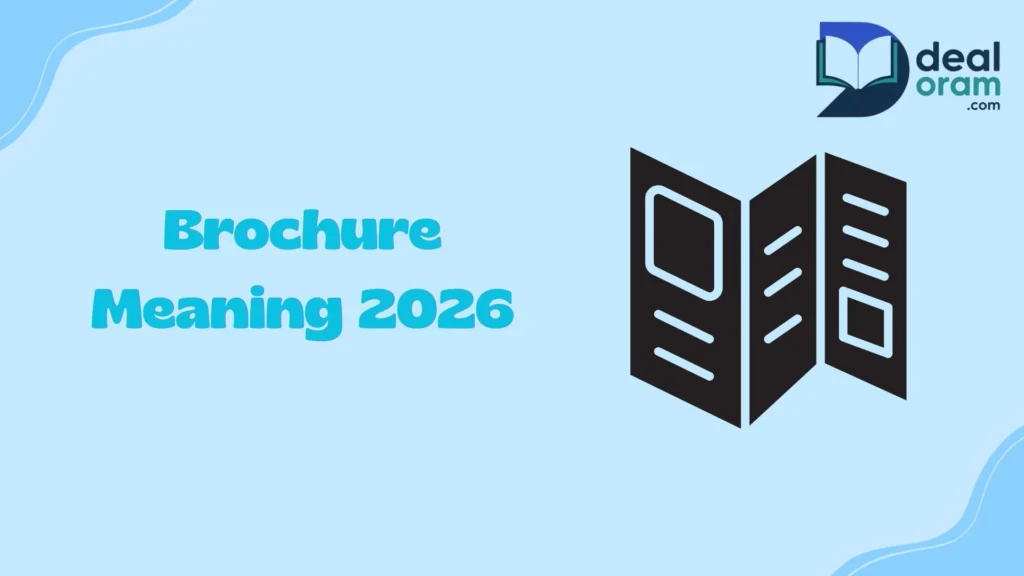
A brochure is a small promotional or informational document, usually folded into sections, designed to present key details in a visually engaging format.
Quick Answer:
A brochure is a short printed or digital booklet used to advertise, inform, or explain a product, service, organization, or event.
Origin of the Word
The word “brochure” comes from French, meaning “stitched paper.” Early brochures appeared in Europe in the 18th and 19th centuries as small stitched booklets used for announcements and product promotions.
Over time, brochures evolved from simple black-and-white leaflets into modern multi-color marketing tools and now even interactive digital experiences.
Pronunciation Guide
bro-SHUR (rhymes with “sure”)
Phonetic: /broʊˈʃʊr/
How to Use “Brochure” Correctly in Marketing & Communication
A brochure is not just a random paper it has a purpose and context. Using brochures correctly can make communication clearer and more persuasive.
🎯 Correct Context & Tone
Brochures are typically:
- Informational
- Promotional
- Professional yet friendly
- Visually appealing
They are used to summarize key points rather than provide deep technical detail.
📱 Platform-Specific Usage (Modern Context)
Print Brochures:
- Trade shows
- Hotels
- Universities
- Clinics
Digital Brochures:
- WhatsApp PDF sharing
- Email marketing attachments
- Website downloads
- Instagram link-in-bio resources
❌ When NOT to Use a Brochure
Avoid brochures when:
- You need detailed instructions
- Legal documentation is required
- Audience expects formal reports
- Information changes frequently
✨ Formatting Tips
- Use short headings
- Add bullet points
- Include strong visuals
- Use brand colors
- Maintain readable font size
Real Conversation Examples Using Brochure
Understanding brochure meaning becomes easier when you see real-life scenarios.
🧑🤝🧑 Example 1 Between Friends
Ali: I’m planning a trip to Hunza.
Bilal: Grab the travel agency brochure. It has all the packages.
👉 Emotional tone: Helpful suggestion.
🎓 Example 2 School Context
Teacher: Your project should include a brochure about environmental awareness.
Student: Should I add pictures and facts?
👉 Emotional tone: Instructional and creative.
🏢 Example 3 Work Chat
Manager: Send the new product brochure to the client.
Designer: Done I’ve attached the updated PDF.
👉 Emotional tone: Professional and task-focused.
🏡 Example 4 Real Estate Visit
Agent: Here’s a brochure with floor plans and pricing.
Buyer: Perfect, I’ll review it with my family.
👉 Emotional tone: Informative and reassuring.
🎮 Example 5 Event Promotion
Organizer: We printed gaming event brochures for the expo.
Volunteer: Great, I’ll distribute them at the entrance.
👉 Emotional tone: Promotional and energetic.
Common Mistakes & Misunderstandings
Even though brochures are common, people often misunderstand them.
❗ Mistake 1: Confusing Brochure with Pamphlet
Many assume both are identical.
Reality:
- Brochure = Designed marketing tool
- Pamphlet = Simple informational sheet
❗ Mistake 2: Adding Too Much Text
A brochure is meant to be quick to scan. Overloading it with paragraphs reduces effectiveness.
❗ Mistake 3: Ignoring Target Audience
A luxury travel brochure should not look like a school science leaflet. Design and tone must match audience expectations.
👴 Generational Differences
- Older generations prefer printed brochures
- Millennials like PDF brochures
- Gen Z prefers interactive or swipeable brochure content
🌍 Cultural Differences
In some regions, brochures are essential for trust-building in business deals. In others, digital landing pages replace them.
Brochure Across Different Platforms & Demographics
👩💻 Gen Z Usage
- Prefers mobile-friendly brochure formats
- Likes minimal design
- Shares brochure links in group chats
🧑💼 Millennial Usage
- Uses brochures in presentations
- Downloads PDF brochures for research
- Shares via email
👨💼 Professional Context
Brochures remain a safe-for-work communication tool.
They are considered semi-formal marketing material.
📊 Trending Usage
Modern brochures are now:
- Interactive
- Animated
- Video-embedded
- Clickable
Companies increasingly use digital flipbook brochures to replace traditional print versions.
Related Terms, Alternatives & Similar Concepts
| Term | Meaning |
|---|---|
| Pamphlet | Simple informational sheet |
| Flyer | Single-page promotional paper |
| Leaflet | Small printed advertisement |
| Catalog | Detailed product listing booklet |
| Prospectus | Academic or institutional information booklet |
| Booklet | Small bound informational book |
| Handout | Informational paper given during events |
| Lookbook | Visual brand or fashion showcase |
| Portfolio | Collection of professional work |
| Info Sheet | Fact-based summary document |
👉 Learn more about related concepts like pamphlet vs flyer differences, catalog design basics, and digital marketing materials.
FAQs:
What is the main purpose of a brochure?
The main purpose of a brochure is to inform and persuade. It helps organizations present key benefits, features, or messages in a concise and visually attractive way. Brochures guide readers toward taking action such as visiting a website, booking a service, or attending an event.
Are brochures only printed?
No. While brochures started as printed materials, today they exist in digital formats like PDFs, interactive web pages, and mobile-optimized flipbooks. Many businesses now prioritize digital brochures because they are easy to share and update.
What makes a brochure effective?
An effective brochure has clear headings, engaging visuals, concise text, and a strong call-to-action. It should solve a reader’s problem quickly and make the next step obvious, such as calling a number or scanning a QR code.
How many types of brochures are there?
Common brochure types include bi-fold, tri-fold, z-fold, gate-fold, and booklet brochures. The choice depends on how much information you need to present and how visually creative the design should be.
Can students use brochures for projects?
Yes. Brochures are popular in school assignments because they encourage creativity, research summarization, and visual communication skills. Teachers often assign brochure projects for topics like history, science awareness, and tourism studies.
Conclusion:
So, what’s the real takeaway about brochure meaning?
A brochure is more than just folded paper. It’s a powerful communication tool that blends design, psychology, and storytelling. Whether printed or digital, brochures help people understand important information quickly.
In today’s fast-scrolling world, attention spans are short. That’s why brochures remain relevant they simplify complex ideas into attractive, bite-sized content.
From classrooms to corporate boardrooms, brochures continue to influence decisions. Now that you understand how they work, you can use them smarter for marketing, education, or personal projects.
👉 Got a favorite marketing material or design tip? Drop it in the comments below and explore more communication guides to stay ahead.

Hi, I’m John James, the writer behind Dealoram.com, where meanings aren’t just explained… they’re decoded for real life.
I started this platform with one goal: make words easier to understand in a world where language keeps evolving every day. From trending slang to deeper word meanings, I break things down in a way that’s simple, clear, and actually useful.
No complicated definitions. No wasted time. Just straight answers that help you understand what people really mean, and how to use it yourself.