Ever wondered why words like “cat,” “dog,” or “school” sound so different even though they follow similar patterns? The secret lies in consonants. Understanding consonant meaning is one of the simplest ways to improve your pronunciation, spelling, and overall communication whether you’re texting, writing, or speaking.
In today’s fast-paced digital world, where clarity matters more than ever, knowing how consonants work can actually make your messages sharper and easier to understand. From casual chats to professional writing, consonants play a major role in how language flows.
This guide is updated for 2026 and designed to break everything down in the easiest way possible. You’ll learn what consonants are, how they’re used, real-life examples, common mistakes, and even how they differ across platforms and generations.
What Does “Consonant” Mean?
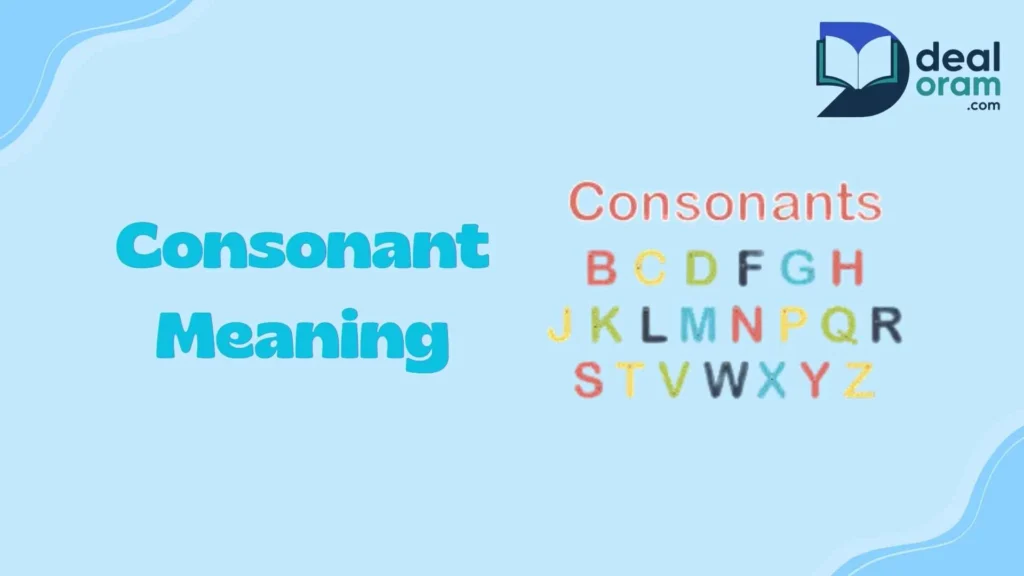
A consonant is a speech sound made by blocking or restricting airflow in the mouth using the tongue, lips, or teeth.
Quick Answer:
A consonant is any letter or sound in language that is not a vowel and is produced by partially or fully blocking airflow when speaking.
Origin of the Word
The term “consonant” comes from Latin consonare, meaning “to sound together.” Historically, consonants were seen as sounds that accompany vowels.
How It Evolved
Originally studied in classical languages like Latin and Greek, consonants are now a core part of modern linguistics and phonetics. Today, they’re essential in everything from speech therapy to AI voice systems.
Pronunciation Guide
Consonant is pronounced as:
/ˈkɒn.sə.nənt/ (UK) or /ˈkɑːn.sə.nənt/ (US)
How to Use “Consonant” Correctly in Texts & Chat
Context & Tone
The term consonant meaning is mostly used in:
- Educational settings
- Language learning apps
- Grammar discussions
It’s not slang but it’s still useful in casual conversations when discussing language.
Platform-Specific Usage
- WhatsApp/SMS: “This word has 5 consonants lol”
- Instagram: Used in captions for educational posts
- Twitter/X: Often appears in language threads
- Discord/Reddit: Common in learning communities
When NOT to Use It
Avoid using “consonant” in:
- Casual jokes unrelated to language
- Professional emails unless relevant
Formatting Tips
- No capitalization needed unless starting a sentence
- Often paired with examples: “B, C, D are consonants”
- Emojis rarely used, but 📚 or ✏️ can fit educational tone
Real Conversation Examples Using “Consonant”
1. Between Friends
A: Why is “rhythm” so hard to spell?
B: Because it’s full of consonants and barely any vowels 😅
👉 Conveys humor and frustration
2. In a Classroom
Teacher: Can you name three consonants?
Student: B, T, and S.
👉 Shows basic understanding
3. In a Group Chat
A: This password needs a consonant and a number
B: Okay adding “T7”
👉 Practical usage
4. Language Learning App Chat
User: I struggle with consonant pronunciation
👉 Expresses learning difficulty
5. At Work (Casual)
Colleague: This brand name is catchy strong consonants
👉 Highlights sound impact in branding
Common Mistakes & Misunderstandings
1. Confusing Consonants with Letters
Not all letters behave the same way. For example:
- “Y” can act as both a vowel and a consonant
2. Thinking Consonants Always Make Hard Sounds
Some consonants are soft:
- “C” in “city” vs “cat”
3. Ignoring Pronunciation Differences
Different accents may pronounce consonants differently, especially in global English.
Generational Misunderstandings
- Younger learners grasp phonetics faster via apps
- Older generations may rely on traditional grammar rules
How to Clarify
If someone doesn’t understand:
- Use examples instead of definitions
- Show words instead of explaining theory
“Consonant” Across Different Platforms & Demographics
Gen Z vs Millennials
- Gen Z: Learns via apps, memes, short videos
- Millennials: More formal learning (school-based)
Platform Popularity
- TikTok: Short phonics videos explaining consonants
- Instagram: Infographics and reels
- Discord: Language learning servers
Formal or Informal?
- Neutral term
- Safe for both academic and professional use
Trending Use
Educational content creators have made phonics (including consonants) trend again, especially in short-form video platforms.
Related Slang, Abbreviations & Alternatives
| Term | Meaning |
|---|---|
| Vowel | A sound made without blocking airflow |
| Phoneme | Smallest unit of sound |
| Alphabet | Complete set of letters |
| Digraph | Two letters making one sound (e.g., “sh”) |
| Syllable | A unit of pronunciation |
| Accent | Way of pronouncing words |
| Pronunciation | How words are spoken |
| Silent Letter | Letter not pronounced (e.g., “k” in “knife”) |
| Linguistics | Study of language |
FAQs:
What is the meaning of consonant in English?
A consonant is a speech sound produced by blocking airflow using the mouth. Letters like B, D, and T represent consonants in English. They differ from vowels, which are produced without obstruction.
How many consonants are there in English?
There are 21 consonant letters in the English alphabet. However, the number of consonant sounds is higher because some letters produce multiple sounds.
What is the difference between vowels and consonants?
Vowels are produced without blocking airflow (A, E, I, O, U), while consonants involve some level of obstruction using the tongue, lips, or teeth.
Can a letter be both a vowel and a consonant?
Yes, the letter “Y” can act as both. For example, it’s a consonant in “yes” and a vowel in “gym.”
What are examples of consonant sounds?
Examples include sounds like /b/ in “bat,” /t/ in “top,” and /s/ in “sun.” These sounds involve restricting airflow.
Conclusion:
Understanding consonant meaning isn’t just for grammar geeks it’s a practical skill that improves how you speak, write, and even text. Once you notice consonants, you start seeing patterns in words everywhere.
They shape how language sounds. They add clarity. And honestly, they make communication more effective.
Now that you’ve got the full breakdown, try spotting consonants in your daily conversations. You’ll be surprised how often they matter.
👉 Drop your favorite word packed with consonants below or explore more language guides to level up your communication game!

Hi, I’m Andy Alex, the voice behind Dealoram.com, where meanings aren’t just explained, they’re made easy.
I started this space with one simple idea: words shouldn’t feel complicated. Whether it’s trending slang, text abbreviations, or everyday terms people use without thinking, I break them down into clear, quick, and actually useful explanations.
Because let’s be honest, language moves fast. One day it’s a normal word, the next it’s viral with a totally different meaning. That confusion? I fix it.