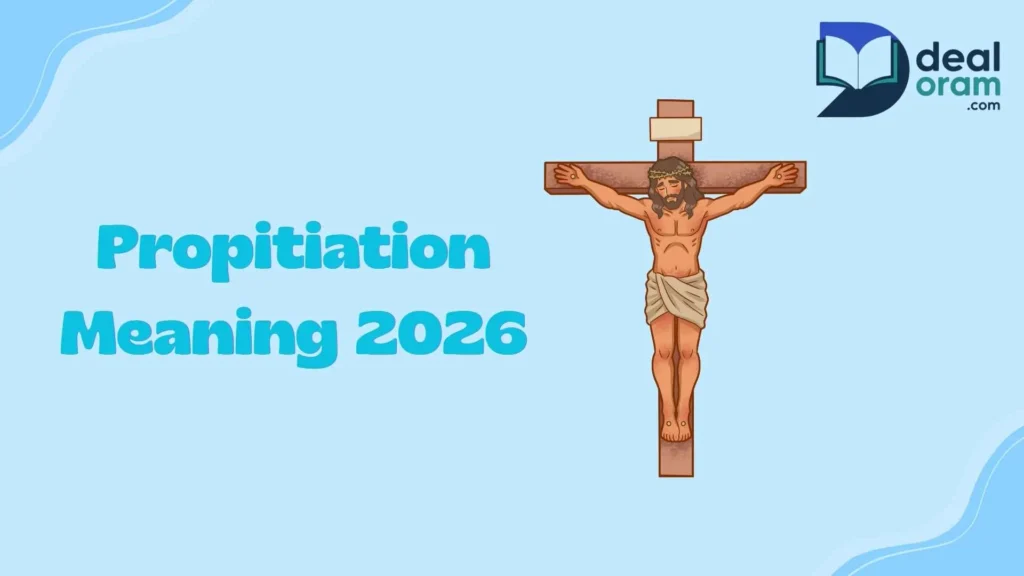
Are you searching for the true Propitiation Meaning in the Bible and wondering why this powerful theological word appears in crucial Scripture passages (and what it really means for your faith)?
Many believers feel confused when they encounter deep Biblical terms, yet understanding propitiation can unlock a more transformational, life-changing view of God’s grace, atonement, and salvation.
In this guide, you will discover the clear Biblical definition, its spiritual significance (and how it connects to Jesus’ sacrifice), plus practical insights that make this complex doctrine simple and easy to understand.
If you want clarity, confidence, and a stronger connection to the Gospel message, this is the place to start.
Power Words: Revealing, Essential, Transformational, Powerful, Proven, Deep, Ultimate, Enlightening, Life-Changing, Authentic
📚 Table of Contents (Recommended)
- What Does Propitiation Mean?
- Origin & Biblical Context
- How to Understand the Concept Today
- Real-Life Analogy Examples
- Common Misunderstandings
- Across Christian Traditions
- Related Terms & Alternatives
- FAQs
What Does “Propitiation” Mean? (Definition + Origin)
In simple terms, propitiation means appeasing anger or restoring favor through an offering or sacrifice.
In the Bible, it refers to the idea that God’s righteous anger toward human sin is satisfied through a sacrificial act.
Quick Answer:
Propitiation in the Bible means turning away God’s wrath against sin through a sacrifice — most commonly understood as the sacrificial death of Jesus Christ.
📜 Origin of the Word
The English word comes from the Latin propitiare, meaning “to make favorable.”
Biblically, the concept appears most clearly in the New Testament Greek word hilasterion — often translated as propitiation, atoning sacrifice, or mercy seat, depending on the Bible version.
⏳ How the Meaning Evolved
- Old Testament context: Animal sacrifices symbolized covering sin.
- New Testament theology: Jesus’ death is presented as the ultimate, final sacrifice.
- Modern interpretation: Some theologians emphasize appeasing wrath; others stress reconciliation and love.
Pronunciation guide:
proh-pish-ee-AY-shun
How to Understand Propitiation Correctly
Unlike slang or internet abbreviations, biblical terms require context. 📖
Emotional & Theological Tone
Propitiation carries themes of:
- Justice
- Mercy
- Forgiveness
- Restoration
- Divine love
It’s not casual language — it’s deeply spiritual and doctrinal.
When It Applies
- Discussions about salvation
- Sermons or Bible study
- Theology courses
- Christian apologetics
When It Doesn’t
- Everyday conversation
- Professional business contexts
- Casual texting (unless discussing religion)
Formatting Tips
- Usually lowercase unless starting a sentence
- Often paired with words like atonement, sacrifice, or redemption
Real-Life Analogy Examples of Propitiation
The biblical idea can feel abstract. These dialogue-style examples make it clearer.
Example 1 — Between Friends
A: “I messed up big time and broke his laptop.”
B: “What did you do?”
A: “Paid for a new one and apologized.”
👉 Emotional meaning: The payment restored peace — similar to the idea of satisfying justice.
Example 2 — Family Context
Parent: “You broke the rules.”
Child: “I’ll do extra chores to make up for it.”
👉 Emotional meaning: Attempt to restore favor after wrongdoing.
Example 3 — Classroom Setting
Student: “Can I redo the assignment?”
Teacher: “Yes, but you must complete extra work.”
👉 Emotional meaning: Making amends to correct failure.
Example 4 — Workplace
Employee: “I missed the deadline. I’ll stay late to fix everything.”
👉 Emotional meaning: Taking responsibility to repair consequences.
Example 5 — Spiritual Analogy
Believer: “Humans cannot fully fix sin themselves.”
Pastor: “That’s why Christ’s sacrifice is described as propitiation.”
👉 Emotional meaning: Divine solution to a moral problem.
Common Mistakes & Misunderstandings
❌ Mistake 1: Thinking Propitiation Means Bribing God
Biblically, it’s not manipulation. It’s about justice being satisfied through a divinely provided sacrifice.
❌ Mistake 2: Confusing It With Atonement
Atonement = broader concept of reconciliation.
Propitiation = specific focus on appeasing righteous wrath.
❌ Mistake 3: Assuming All Christians Interpret It the Same
Different traditions emphasize:
- Justice satisfaction
- Love and reconciliation
- Victory over sin
Generational & Cultural Differences
- Older readers may prefer traditional translations using “propitiation.”
- Younger audiences often see “atoning sacrifice” in modern translations.
- Non-native English speakers may find the theological nuance challenging.
Propitiation Across Different Platforms & Demographics
📱 Among Gen Z
- Rarely used in casual conversation
- Appears mostly in Christian TikTok or theology content
- Sometimes explained through memes or short explainer videos
🧑💼 Among Millennials
- Common in Bible study apps
- Appears in podcasts or faith-based blogs
👴 Older Generations
- Familiar from traditional church teachings
- Seen as core doctrine
Formality Level
- Highly formal theological term
- Safe for church or academic discussion
- Not suitable for workplace jargon unless context demands
Related Biblical Terms & Alternatives
| Term | Meaning |
|---|---|
| Atonement | Making reconciliation for sin |
| Redemption | Being “bought back” or saved |
| Justification | Being declared righteous |
| Sacrifice | Offering made to God |
| Mercy | Compassion instead of punishment |
| Grace | Undeserved favor |
| Reconciliation | Restored relationship |
| Expiation | Removal or cleansing of sin |
| Salvation | Deliverance from sin |
| Covenant | Sacred agreement |
FAQs:
What is the simple definition of propitiation?
It means satisfying divine justice through a sacrifice. In Christianity, this usually refers to Jesus’ death being seen as restoring the relationship between God and humanity.
Why does the Bible use difficult words like propitiation?
Many Bible translations aim for accuracy to original Greek and Hebrew meanings. Complex theological terms help preserve nuanced doctrines that simpler words might not fully capture.
Is propitiation still relevant today?
Yes. It remains central in discussions about salvation, forgiveness, and the nature of God’s justice and love in Christian theology.
Which Bible verses mention propitiation?
Common references include passages in Romans, Hebrews, and the letters of John — depending on translation choices.
Do modern Bible translations still use the word?
Some do, but many replace it with phrases like “atoning sacrifice” or “sacrifice of reconciliation” to improve readability.
Conclusion:
Big words can feel intimidating. But understanding the propitiation meaning in the Bible unlocks deeper insight into one of Christianity’s most important ideas — how justice and mercy meet.
At its heart, propitiation is about restoration. Broken relationships repaired. Wrongs addressed. Hope renewed. ✨
Whether you’re studying theology, exploring faith, or simply curious about biblical language, knowing this concept helps you read Scripture with clarity and confidence.
👉 Got another confusing Bible word or text abbreviation you want explained? Drop it in the comments — let’s decode it together.

Hi, I’m John James, the writer behind Dealoram.com, where meanings aren’t just explained… they’re decoded for real life.
I started this platform with one goal: make words easier to understand in a world where language keeps evolving every day. From trending slang to deeper word meanings, I break things down in a way that’s simple, clear, and actually useful.
No complicated definitions. No wasted time. Just straight answers that help you understand what people really mean, and how to use it yourself.